AI-Powered Structural Biology Initiative Aims to Preemptively Map Viral Proteomes to Bolster Global Pandemic Readiness

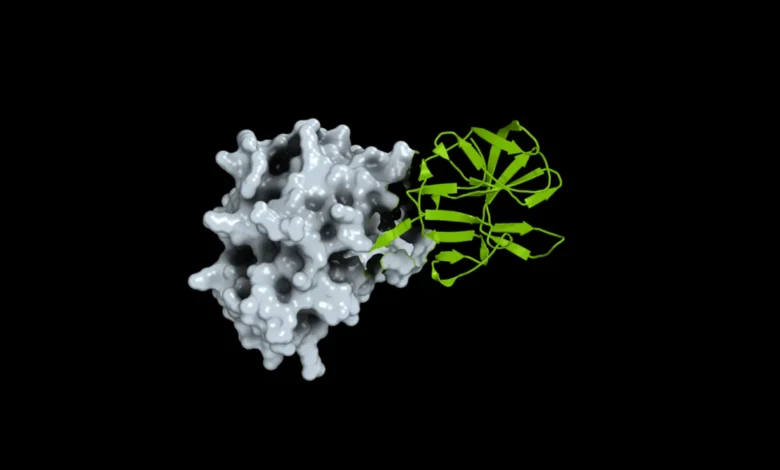
The global scientific community is shifting from a reactive stance toward viral threats to a proactive, preemptive strategy, fueled by the integration of artificial intelligence and high-performance computing. When the SARS-CoV-2 pandemic began, the rapid development of mRNA vaccines was made possible largely because researchers had already spent decades studying the structures of related coronaviruses. This foundational knowledge allowed for the near-instantaneous identification of the viral spike protein as a therapeutic target. Recognizing that the next major pandemic could emerge from an unknown pathogen—one for which no such structural data exists—a consortium of global research organizations, led by NVIDIA and Google DeepMind, has released a massive, open-access database containing the predicted 3D structures of protein complexes for more than 2,800 viruses.
The Technological Evolution of Protein Folding
For decades, the "protein folding problem"—the challenge of predicting the precise 3D shape of a protein based solely on its amino acid sequence—was one of biology’s most stubborn hurdles. Traditional methods, such as X-ray crystallography, cryo-electron microscopy, and nuclear magnetic resonance spectroscopy, are remarkably precise but prohibitively slow and expensive. Determining a single protein structure can take months or even years of laboratory work and cost thousands of dollars.
The emergence of AlphaFold2, an AI model developed by Google DeepMind, revolutionized this landscape. By leveraging machine learning to analyze evolutionary, physical, and geometric constraints, AlphaFold2 can predict protein structures with near-experimental accuracy in minutes. However, proteins rarely function in isolation; they typically operate in complex, multi-protein assemblies. By utilizing the NVIDIA BioNeMo Inference Runtime, the research team was able to scale this capability, applying it to thousands of viral proteomes to predict how these individual molecules interact as functional complexes. This leap in computational throughput is unprecedented, effectively compressing what would have been centuries of manual experimental work into a streamlined, GPU-accelerated pipeline.
Chronology of a Digital Biological Revolution
The path to this release represents a multi-year effort to democratize structural biology.
- 2020-2021: During the height of the COVID-19 pandemic, the limitations of existing structural data for emerging zoonotic viruses became a central concern for public health agencies.
- 2022: The AlphaFold Database expanded significantly, providing hundreds of millions of protein structures, effectively mapping nearly the entire known protein universe.
- 2023: Researchers began the shift from individual proteins to complex interactions, recognizing that viral entry and replication mechanisms are driven by multi-protein "machines."
- 2024: The current collaboration, involving the European Molecular Biology Laboratory’s European Bioinformatics Institute (EMBL-EBI), NVIDIA, and various academic partners, synthesized these advancements to release the comprehensive viral complex dataset. This release coincides with high-level United Nations discussions on global pandemic preparedness, underscoring the urgency of the mission.
Bridging the Knowledge Gap
The implications of this dataset are profound, particularly for the 30% of the newly mapped protein interactions that have never been documented in the Protein Data Bank. In the past, scientists working on novel or lesser-studied viruses were often "working in the dark," forced to rely on trial-and-error experimentation without a structural map. By providing these high-confidence models, the consortium is essentially building a "digital library" of viral weaponry.
These 2,800 viruses include common pathogens, seasonal threats, and high-risk families known to have pandemic potential. By identifying the architecture of these complexes, pharmaceutical researchers can identify "druggable" pockets or sites for vaccine antigens before a specific virus ever makes the leap to humans. This capability reduces the time required for initial diagnostic development and drug discovery, potentially shaving months off the response time during the early, critical phases of a future outbreak.
Official Perspectives and Institutional Support
The collaboration is not merely a technical achievement but a coordinated policy effort to improve global health equity. Jo McEntyre, interim director of EMBL-EBI, highlighted the importance of universal access. "Making this data open is critical for understanding viral diagnostics and developing treatments and vaccines," McEntyre noted. She emphasized that the availability of these models lowers the barrier to entry for scientists in low-resource settings who are often on the front lines of localized outbreaks, allowing them to conduct sophisticated structural analysis without needing access to multi-million-dollar laboratory equipment.
Joe Grove, a professor of molecular virology at the University of Glasgow, who served as a collaborator on the project, echoed the sentiment that the database acts as a form of intellectual "stockpiling." Reflecting on his own academic training, Grove noted that the lack of structural information was once a significant bottleneck for doctoral researchers. "This database is an engine for hypothesis generation," added Chris Dallago, applied research science team lead in digital biology at NVIDIA. He explained that by viewing protein interactions as complexes, the scientific community can now investigate the "machinery" of viral infection rather than just individual parts, enabling a holistic approach to disease pathology.
Statistical Analysis of Future Pandemic Risk
The urgency behind this initiative is supported by sober projections from organizations like the Center for Global Development. Analytical models suggest that there is a roughly 50% probability that the world will encounter a pandemic as severe as COVID-19 by 2050. Factors driving this risk include increased global urbanization, the encroachment of human activity into wildlife habitats—which increases the frequency of zoonotic spillovers—and the rapid pace of international travel.
The "BioNeMo Structure Prediction Pipeline," now released as an open-source tool, allows researchers to continue this work independently. By providing the GPU-accelerated workflow, the coalition ensures that the database is not a static repository but a living tool. As new viral sequences are identified in the wild, laboratories worldwide can use the same infrastructure to predict the structures of those specific pathogens, creating a distributed, real-time monitoring network.
Broader Implications for Digital Biology
This project signifies a fundamental shift in how biological research is conducted: a transition from an experimental-first model to a compute-first model. While the AI-predicted structures require experimental verification, they provide a high-confidence roadmap that directs laboratory resources toward the most promising targets, eliminating the need for exhaustive, blind screening.
The integration of AlphaFold2 with NVIDIA’s BioNeMo platform serves as a blueprint for other fields in life sciences. Beyond viruses, the ability to predict protein complexes has direct applications in oncology, neurodegenerative disease research, and synthetic biology. By moving from the "what" of protein sequences to the "how" of protein interactions, the scientific community is entering an era of precision medicine that is inherently faster and more collaborative.
As the AlphaFold Database continues to host over 260 million structures, the contribution of these viral complexes serves as a cornerstone for the next generation of pandemic prevention. It is a calculated, technology-driven hedge against the uncertainty of the future, ensuring that when the next pathogen emerges, the scientific community will not be starting from zero, but from a foundation of accessible, actionable intelligence.
For researchers and public health officials, the path forward is clear: the integration of AI, high-performance computing, and open science is the most effective defense against the next, inevitable, and potentially devastating, global health crisis. The infrastructure is now in place; the challenge remains for the global community to utilize these digital tools to secure a more resilient future.
Related posts: